|
Healthcare Projects
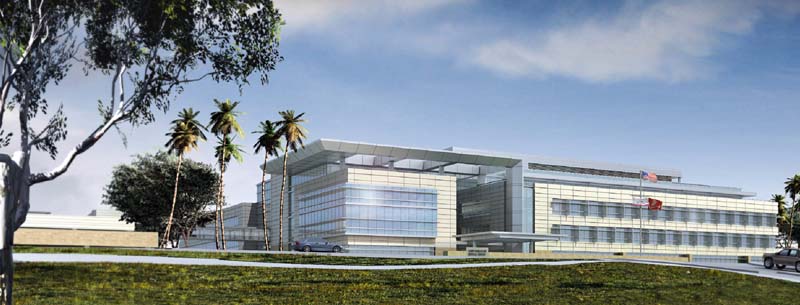
Camp Pendleton Naval Hospital
Location: Camp
Pendleton, CA.
Owner: NAVFAC SW
Architects: HDR Architects-Bridging Documents / HKS
Architects
General Contractor: Clark/McCarty joint venture
Expected Construction Completion: 2014
LEED Certification: anticipated LEED NC v2.2 Gold Level
LEED Consultant Services: Design and Construction Phases
through final LEED certification administration.
This $394M--$451M design/build healthcare project, to be
completed in less than 3 years, will provide a
state-of-the-art new replacement hospital at Camp Pendleton,
California. The 500,000 square foot, multi- story facility
will be located on a 70 acre site overlooking Interstate 5
and the Pacific Ocean, just north of San Diego. The facility
is slated to provide 67 patient beds, primary care,
emergency care, intensive care, specialty clinics, surgery
suites and numerous support spaces. A 1500 space parking
structure and surface parking will be constructed, as well
as a Central Utilities Plant.
Integrating the new facility into the existing, ocean view
site and incorporating sustainable strategies has been a
project priority since Day #1. With LEED Gold level
certification targeted, the design includes many unique
design features, such as a multi-level open atrium and
healing gardens to enhance the patient experience, thus
leading to faster recoveries and earlier hospital
discharges. The approach to sustainability for the Camp
Pendleton Naval Hospital is dedicated to several primary
goals including; reduced energy consumption through good
design and use of a highly efficient HVAC system and potable
water reduction through utilization of low flow fixtures and
native, draught resistant landscaping. Additionally, a
project priority has been reducing overall operational and
maintenance costs. Proposed design and construction
methodologies include: striving to minimize the impact of
the construction process by maximizing the amount of open
space preserved for habitat, managing the quality and
quantity of the stormwater runoff from the new site,
minimizing the heat gain caused by the hardscape and roofing
materials (“heat island effect”), installation of a “cool
roof” and “cool hardscape” surface materials, careful
detailing of the green roof installation to maximize the
life of the roof and building, providing superior insulation
value to the roof, providing facilities to enhance alternate
transportation, such as bike riding, low-emitting and fuel
efficient vehicles and carpooling. Water efficiency
strategies include the goal of reducing potable water use by
at least 30% through the use of low-flow plumbing fixtures,
use of native/adapted low water plants, shrubs and grasses,
use of a high efficiency irrigation system that provides
only the water needed by plantings and connection to the
municipally supplied tertiary level recycled water system.
In the area of energy and atmosphere, the building systems
selected will exceed ASHRAE 90.1-2004 to achieve at least
30% energy cost reduction versus a baseline building.
Renewable energy systems, proven to reduce operational and
maintenance costs while maximizing energy savings will
include a solar domestic hot water system to supply 30% of
the domestic hot water and by incorporating solar panels to
supply renewable energy to offset approximately 3% of the
site’s total energy use.
Highland Hospital
Location:
Alameda County, CA
Owner: County of Alameda, General Services Agency
Architects: SmithGroup, Inc
Ratcliff Architects +& Shah Kawasaki Architects
General Contractor: Clark California Construction
Expected Construction Completion: June 2015
LEED Certification: anticipated LEED NC v2.2 Silver Level
LEED Consultant Services: Design and Construction Phases
through final LEED certification administration.
The project is a 2 phase construction project with a total
budget of $431,000,000.
Phase one, to be completed by 2012, will feature a three
story medical office building to be built over a 176-space
parking structure and will include connectors to the new
hospital. Total square footage will be 78,000.
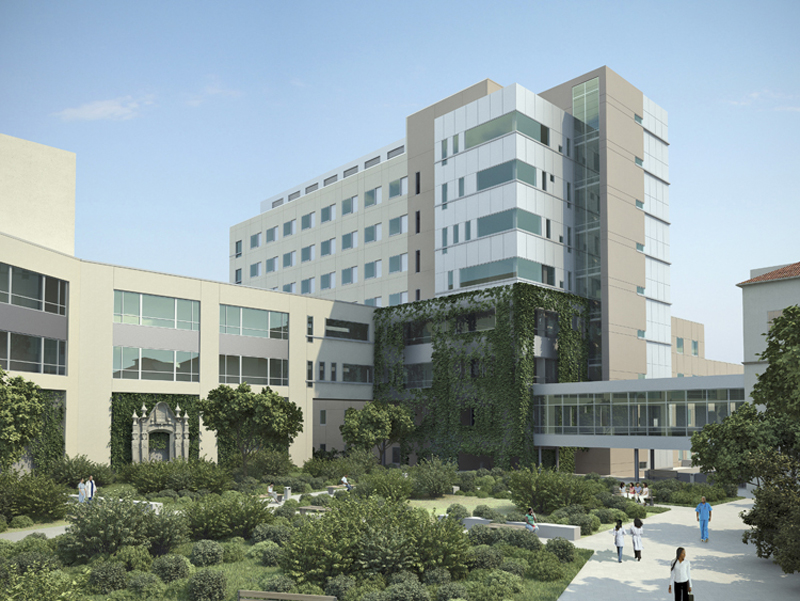
Phase two is the construction of a nine-story, 169-bed Acute
Care Tower. Built above a below-grade central utility plant,
the tower will include intensive care, medical/surgical
beds, labor and delivery, neonatal intensive care, and
miscellaneous diagnostic, treatment and support functions.
Following the completion of the new acute care tower,
Highland Hospital's existing tower will be demolished and a
one-acre interior courtyard, dining terrace, and connecting
structures will be built. Phase two is expected to be
completed in 2016.
Sustainability goals include an innovative thermal storage
concept that will lower energy costs by operating chillers
at night, when energy prices are lower, to cool and store
water. Exterior green screens will provide transitions and
wayfinding for patients and visitors, while cooling and
shading the interiors. The project team will pay particular
attention to life-cycle costs when selecting building
materials. Other LEED credits that will be pursued include
Development Density & Community Connectivity, Alternative
Transportation, Public Transportation Access, Alternative
Transportation, Bicycle Storage & Changing Rooms,
Alternative Transportation, Parking Capacity, Stormwater
Design, Quality Control, Heat Island Effect, Non‐Roof, Heat
Island Effect- Roof, Water Efficient Landscaping Reduction
by 50%, Potable Water Use Reduction by 30%, Optimize Energy
Performance: 38.5% Reduction-New Buildings, Enhanced
Commissioning, Enhanced Refrigerant Management, Construction
Waste Management with diversion of 75% from disposal,
Recycled Content-20%, use of Certified Wood, Increase
Ventilation, Low‐VOC Emitting Materials: Adhesives &
Sealants, Paints & Coatings, Carpet Systems, Indoor Chemical
& Pollutant Source Control and Thermal Comfort-Design.
|


